
African Mask
An African Mask lesson gives students the chance to explore how art can communicate identity, emotion, and storytelling, all while reinforcing key elements of art like symmetry, shape, and line.
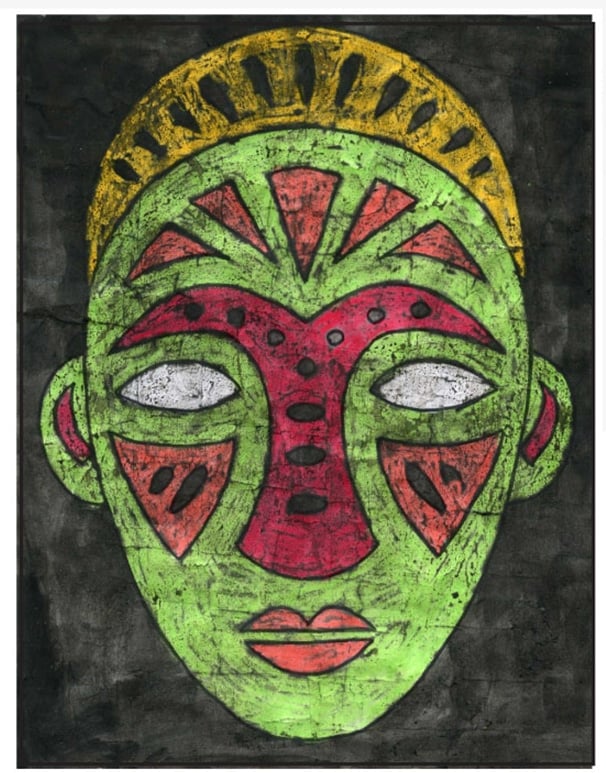
The added batik-inspired technique brings another layer of engagement. Students must press hard with their crayons, wrinkle the paper, and brush over it with black watercolor.
It’s the kind of project that builds confidence because the end product looks impressive, even for students who don’t feel like “artists.”

Teaching Tools

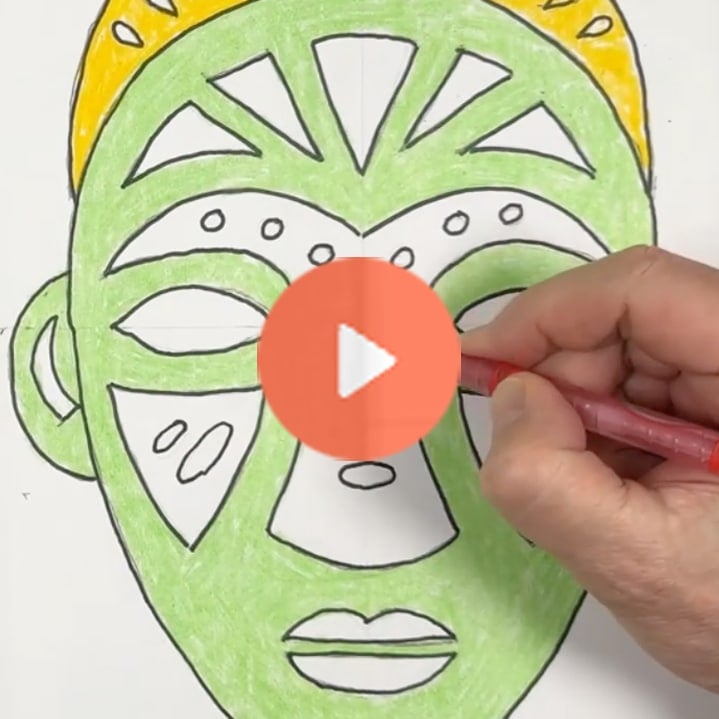
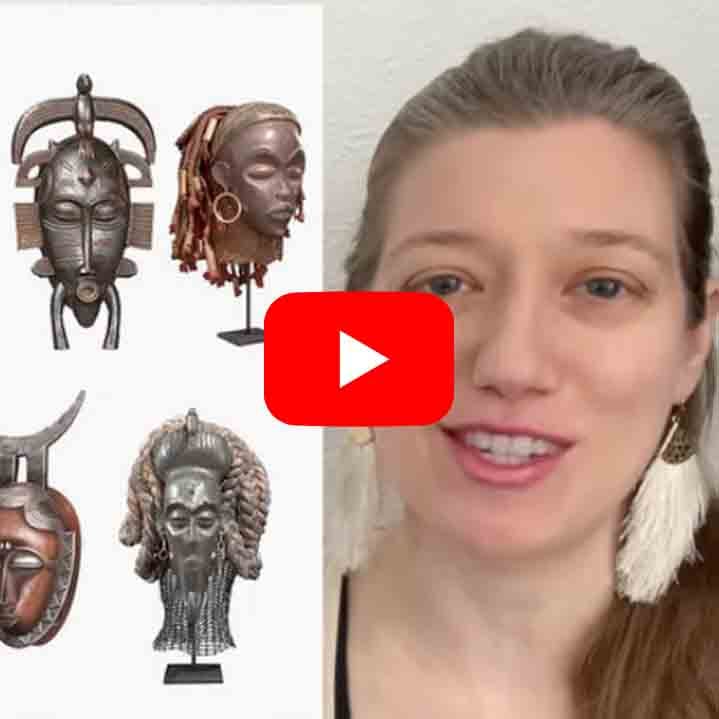


African Mask Video
African Mask Video Short
African Mask PDF Tutorial

African Mask Google Slides

Step by Step Directions
Time needed: 1 hour
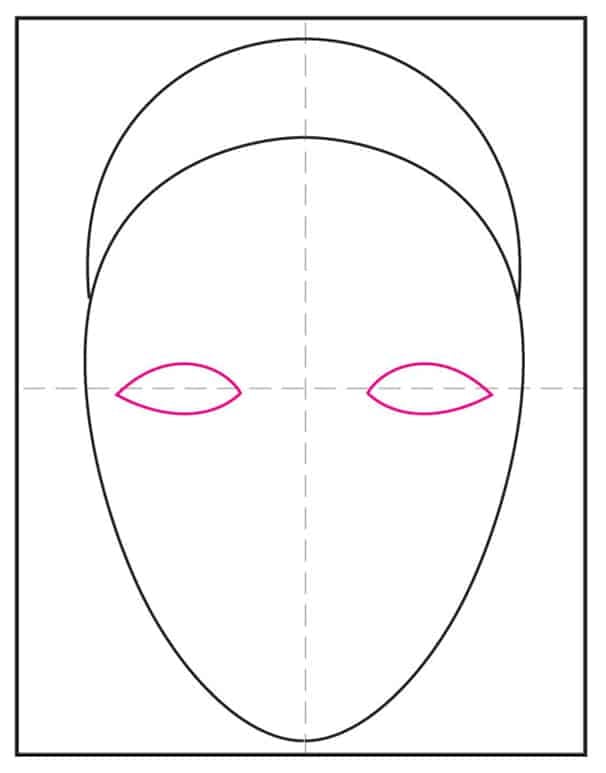
How to Draw an African Mask
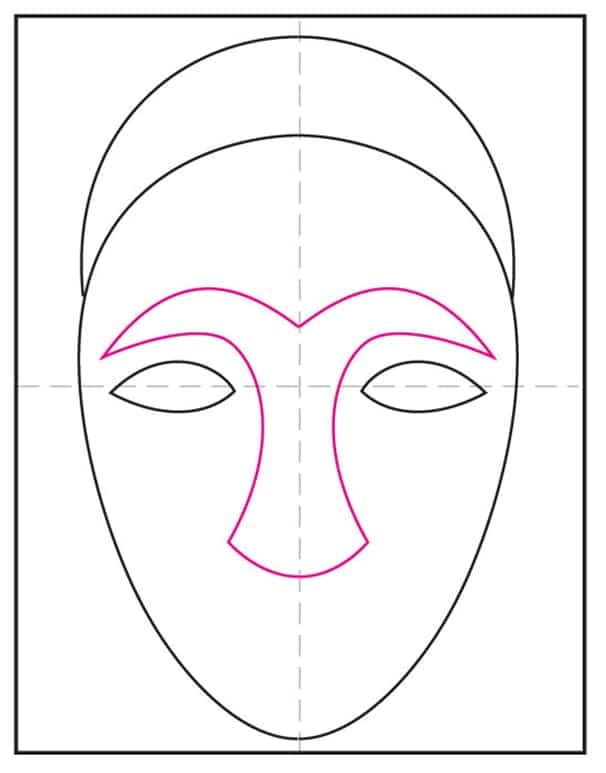
- Draw an oval and add a curve on top

- Add two large eye shapes.
- Draw the nose and brow shape.
- Add the lips and cheek shapes.
- Draw the ears and the triangles on the forehead.
- Add small decorations all around.
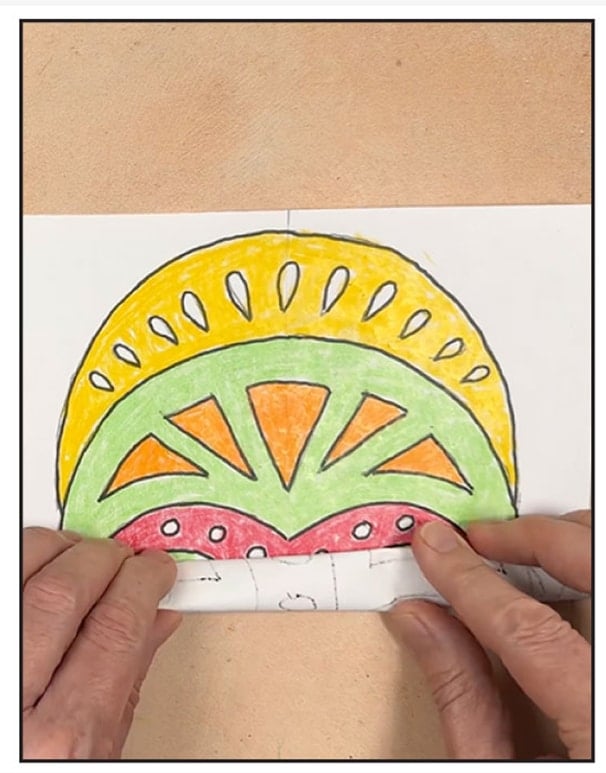
- Trace with a permanent black marker and color with crayons. Use a white crayon to color white things.
- Roll and squeeze to make wrinkles.
- Cover with black watercolor paint.



Intro to African Masks YouTube

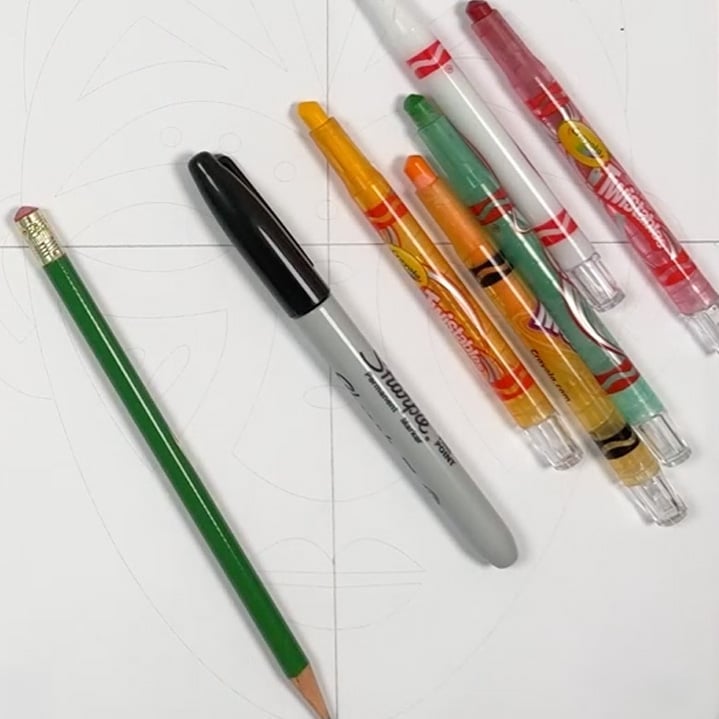
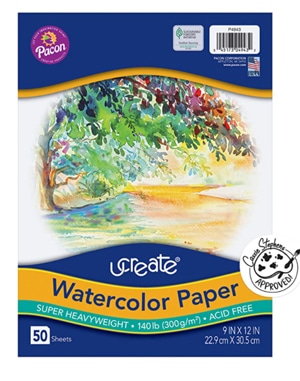
Materials for African Mask
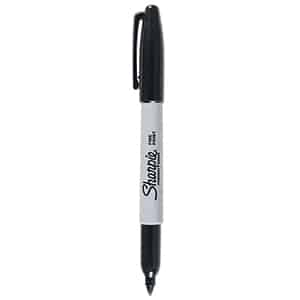
Sharpie Marker
Sharpie Permanent Markers, Fine Point, Black

Pencils
Ticonderoga Wood-Cased Pencils, Unsharpened, #2 HB Soft