172+ Fourth Grade Art Projects & Drawing Lessons
Explore 172+ fourth grade art projects in lots of media and themes. Save planning time with ideas perfectly sized for 4th grade.
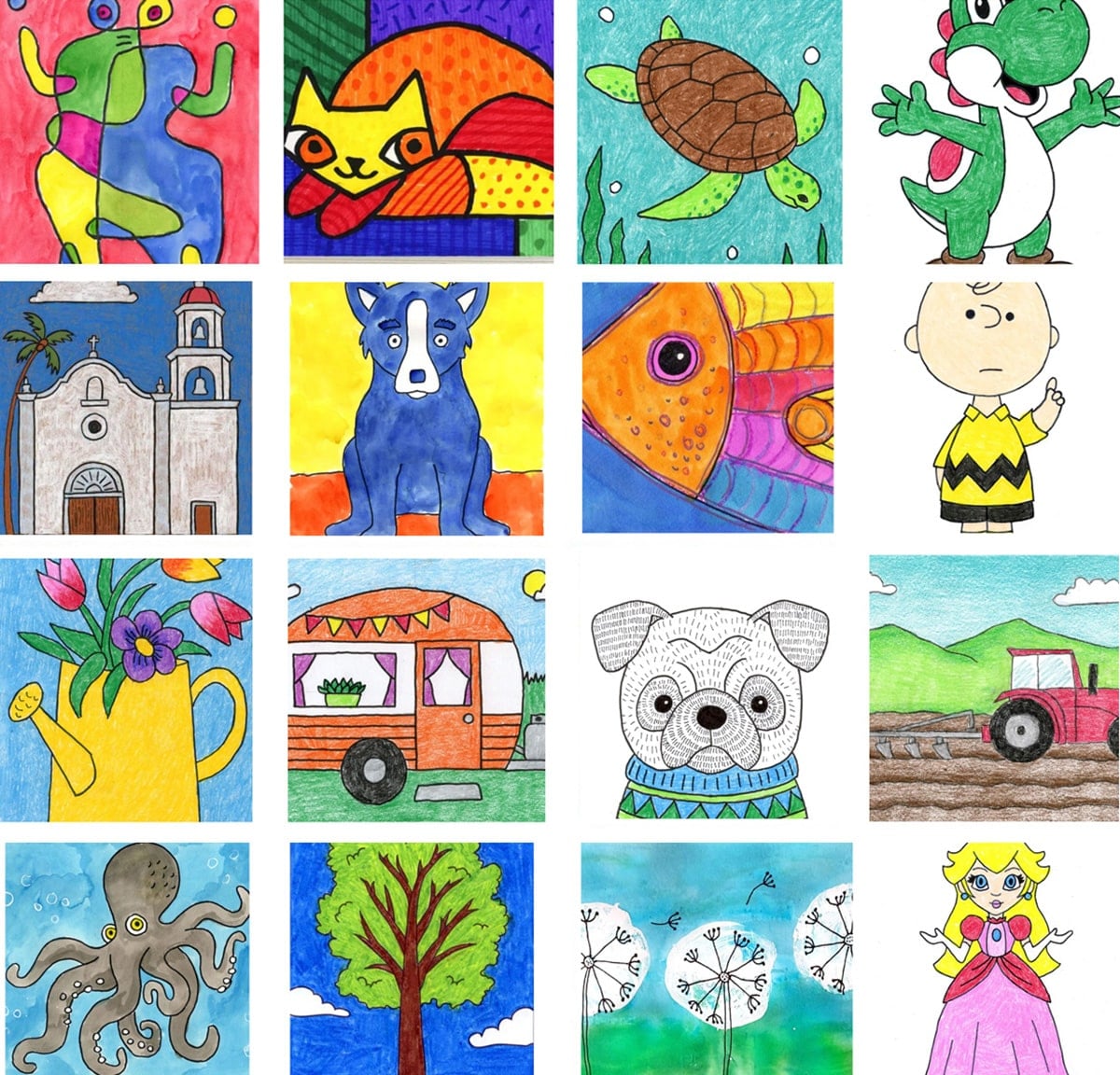
Fourth Grade Art Projects Collection
Fourth grade is such a fun age to teach art because students are ready for more independence, but they still thrive with clear steps and strong visuals. This collection of fourth grade art projects makes it easy to choose lessons that match where your kids are developmentally—curious, capable, and eager to try new things.
Inside you’ll find an assortment of media (drawing, painting, collage, sculpture, printmaking, and more), so you can build variety into your year without spending hours hunting for the “right” project. Whether you need something quick for a busy week, a more involved multi-day lesson, or a plan that uses supplies you already have, you can scan the list and get started fast.
It’s also a simple way to support standards and skill-building without overthinking it. Many of these projects naturally reinforce planning, craftsmanship, creativity, and reflection—plus they’re appropriate for typical fourth grade attention spans and fine motor skills. And best of all, you don’t need to be a “super artist” to get great results when you have solid project options at your fingertips.
Why Fourth Grade Is a Sweet Spot for Skill-Building in Art
Fourth grade is a sweet spot for art because students are ready to level up their skills, but they still love playful themes and hands-on materials. At this age, kids can manage more complex steps—like overlapping shapes, adding details, and thinking about where things belong on the page—so your lessons can shift from “just making” to making with intention.
Many fourth graders are also ready to start practicing big studio fundamentals in a way that actually sticks. That can look like experimenting with line variety (thick, thin, curved, zigzag), building stronger shape and form, and making choices about color—including simple mixing and creating color schemes. You can also introduce value in a more meaningful way by showing students how shading creates depth, and explore texture through both real materials (collage, sculpture) and implied texture (patterns and mark-making in drawing).
This is also a great year to weave in the principles of design without overwhelming anyone. Projects can naturally teach balance (spreading visual weight), contrast (light/dark or warm/cool), pattern (repeating shapes), and emphasis (making one area stand out). When students learn these ideas through a finished artwork, they understand them faster—and they feel proud of the results.
A big collection helps you differentiate, too. You can choose a simpler version of a theme for students who need more support, offer an advanced option for early finishers, or give a few project choices so everyone can work at the right challenge level. And because fourth grade connects well to so many classroom topics—ecosystems, communities, weather, myths, state history, and more—it’s easy to pick projects that tie into what students are already learning while still building real art skills.